Hair Thinning in Men and Women
Getting the cause right matters more than picking a product. Different types of hair loss respond to completely different things.
Medically reviewed by Sarah Hitchcox, RN, BSN
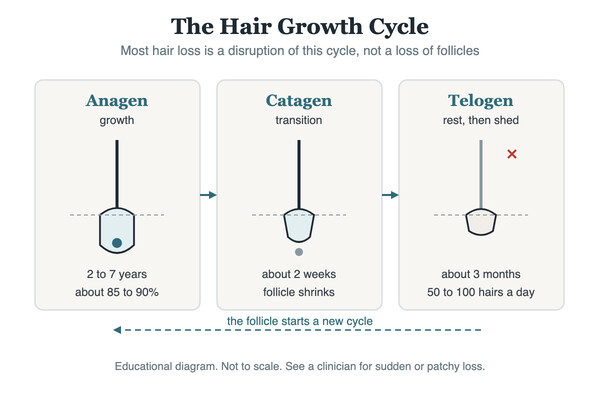
Losing 50 to 100 hairs a day is normal. Noticeable thinning is not the same as normal shedding, and the first useful step is figuring out which pattern you have. Treatment that works for one pattern does nothing for another.
Pattern hair loss
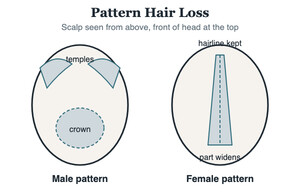
Androgenetic alopecia is by far the most common cause in both sexes. It is driven by inherited follicle sensitivity to androgens. Affected follicles shrink over successive cycles and produce shorter, finer, lighter hairs until they produce almost nothing.
The pattern differs by sex. In men it typically starts at the temples and crown. In women it usually shows as widening of the part and diffuse thinning over the top, with the frontal hairline preserved.
Other common causes
- Telogen effluvium. A sudden diffuse shed two to three months after a trigger: childbirth, surgery, high fever, rapid weight loss, severe stress, or a new medication. It usually recovers on its own once the trigger is resolved.
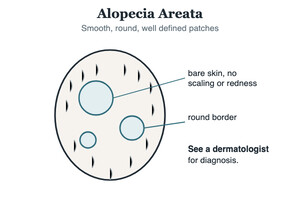
- Alopecia areata. An autoimmune condition causing smooth, round patches of complete loss, sometimes with nail pitting. It can come and go. It needs a dermatologist, and treatment options have expanded in recent years.
- Thyroid disease, iron deficiency, and other medical causes. Worth checking with simple blood work rather than guessing.
- Scarring alopecias. Less common, but they destroy follicles permanently, so early diagnosis genuinely changes the outcome. Redness, scaling, burning, or tenderness on the scalp are warning signs.
Treatments with real evidence
Topical minoxidil is available over the counter and has good trial evidence in both men and women. It works by extending the growth phase. It takes four to six months to judge, causes a temporary shed at the start, and stops working when you stop using it.
Finasteride is a prescription oral medication with strong evidence in men. It is not used in women who may become pregnant because of a risk of birth defects. Side effects should be discussed with a physician before starting.
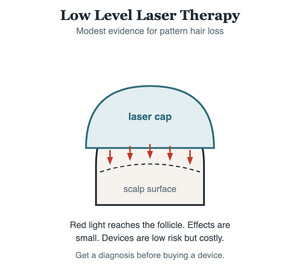
Low level laser devices such as combs and caps have modest supporting evidence for pattern hair loss. Effects are small and the devices are expensive, but they are low risk.
Hair transplant surgery moves resistant follicles into thinning zones. It is a real operation with real risks, and it works best when the underlying loss is already stabilized by medication.
Biotin supplements only help people who are actually deficient, which is rare. Shampoos cannot regrow hair. Be skeptical of before and after photos taken in different lighting.
When to get it checked
See a physician or dermatologist for sudden loss, patchy loss, scalp pain or scaling, loss with other symptoms such as fatigue or weight change, or loss in a child. A clinician can examine the scalp, order the right blood work, and catch scarring types before they become permanent. For cosmetic concerns alongside a medical plan, a Knoxville med spa or a similar clinic near you should still refer you for diagnosis first. Nobody should be selling you a treatment before someone has looked at your scalp.